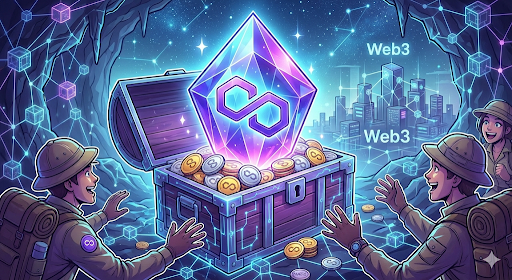
A major NFT collection has officially announced its migration to the Polygon network, citing significantly lower transaction fees and improved scalability as primary reasons for the move. The decision marks another important milestone in the evolution of the NFT ecosystem, as projects increasingly prioritize cost efficiency and user accessibility over brand association with specific chains.
NFT markets have matured considerably since their explosive growth phase. While Ethereum remains the dominant settlement layer for high-value collectibles, rising gas costs during peak periods have historically created friction for users. As a result, scaling networks like Polygon have emerged as attractive alternatives for projects seeking faster transactions and reduced costs.
This migration highlights a broader trend: NFT creators are becoming infrastructure-agnostic and are optimizing for user experience rather than chain loyalty.
Why Fees Matter More Than Ever
Transaction fees can significantly influence NFT adoption. On networks with higher gas costs, simple actions such as minting, transferring, or listing NFTs can become expensive during congestion.
Lower fees provide several benefits:
- Reduced minting costs for creators
• Affordable secondary market transactions
• Increased participation from smaller collectors
• Lower risk for experimental NFT launches
• Enhanced accessibility for global users
For large NFT collections with active communities, even small fee differences can translate into substantial aggregate savings over time.
Polygon’s architecture allows it to process transactions at a fraction of the cost compared to Ethereum’s base layer. This economic advantage often makes it an appealing destination for NFT-heavy ecosystems.
Scalability and User Experience Improvements
Beyond fees, scalability plays a crucial role in NFT ecosystems. During periods of high demand, congested networks can result in delayed confirmations and unpredictable transaction costs.
Polygon offers:
- Faster transaction confirmations
• Higher throughput capacity
• Lower volatility in gas pricing
• Seamless compatibility with Ethereum assets
For NFT collections managing frequent drops, collaborations, and community interactions, consistent performance is essential.
Improved scalability also supports gaming integrations and interactive NFT utilities that require frequent on-chain activity.
Bridging to Polygon: How the Migration Works
Migrating an NFT collection to Polygon typically involves bridging existing assets or relaunching them under compatible token standards.
The process may include:
- Wrapping existing NFTs for Polygon compatibility
• Enabling cross-chain transfers
• Updating marketplace integrations
• Coordinating with wallet providers
• Communicating changes clearly to holders
While technical execution requires precision, Ethereum compatibility simplifies migration compared to moving to entirely separate blockchain ecosystems.
Polygon’s alignment with Ethereum’s tooling and standards makes it easier for projects to transition without disrupting user experience significantly.
Impact on Holders and Community Members
For existing NFT holders, migration raises important questions. Most projects prioritize minimizing friction during transitions.
Potential benefits for holders include:
- Lower transaction fees for trading
• Faster marketplace interactions
• Broader ecosystem integrations
• Reduced cost for staking or utility features
However, communication is critical. Confusion during migration can create uncertainty within communities.
Successful projects typically provide detailed guides, timeline updates, and customer support to ensure smooth onboarding.
Community confidence often determines whether migration strengthens or weakens brand value.
Polygon’s Growing Role in the NFT Sector
Polygon has steadily built its reputation as a strong NFT infrastructure layer. Major brands and entertainment companies have previously leveraged Polygon for digital collectibles due to its cost efficiency.
The network’s NFT growth is supported by:
- Established marketplace integrations
• Cross-chain compatibility
• Enterprise partnerships
• Developer-friendly infrastructure
Lower fees enable experimentation. Smaller creators can launch collections without risking high upfront gas costs.
As NFT markets diversify beyond high-value collectibles into gaming, music, and digital identity, scalable networks become increasingly important.
Competitive Landscape: Ethereum vs Layer 2
Ethereum remains the primary home for premium NFT collections. Its liquidity depth and brand recognition continue to attract blue-chip projects.
However, scalability challenges persist during high-traffic events. Layer 2 solutions like Polygon aim to complement Ethereum by offloading transactional load.
Rather than replacing Ethereum, Polygon often acts as an extension of it. Assets can maintain Ethereum compatibility while benefiting from reduced fees.
This layered approach allows NFT projects to optimize for both liquidity and user experience.
Market Sentiment and Industry Implications
A major NFT collection migrating to Polygon sends a signal to the broader industry.
It suggests that:
- Cost efficiency remains a top priority
• Layer 2 adoption is accelerating
• Infrastructure decisions are becoming strategic
• User experience influences competitive positioning
Other projects may observe migration outcomes before making similar decisions.
If migration improves trading volume and user engagement, it could trigger additional ecosystem shifts.
Conversely, if liquidity fragments or community enthusiasm declines, projects may reconsider future transitions.
Liquidity and Marketplace Integration
Liquidity plays a crucial role in NFT markets. Successful migration requires strong marketplace support to ensure seamless trading.
Polygon benefits from integrations with major NFT marketplaces, allowing collections to maintain visibility and liquidity.
Lower fees can also encourage higher trading frequency, increasing overall volume.
However, maintaining cross-chain liquidity remains a challenge for the NFT industry. Bridging mechanisms must remain secure and reliable.
Technical and Security Considerations
While Polygon offers lower fees and scalability, security remains paramount.
Migration requires:
- Thorough smart contract audits
• Secure bridge mechanisms
• Clear custody structures
• Transparent communication
Security incidents can damage both the collection’s brand and the network’s reputation.
Polygon’s infrastructure has matured significantly, but projects must still exercise rigorous security standards.
Broader Implications for Blockchain Adoption
NFT infrastructure decisions reflect broader blockchain adoption trends. As the industry matures, projects increasingly focus on performance metrics rather than hype.
Cost efficiency, scalability, and reliability are becoming primary differentiators.
Polygon’s ability to attract major NFT collections reinforces its role within the Ethereum ecosystem.
Layer 2 networks may continue capturing transactional-heavy sectors such as gaming, digital collectibles, and social tokens.
Could This Influence Token Performance?
While NFT migrations do not automatically drive token price increases, sustained ecosystem growth can influence sentiment.
Higher network activity may result in:
- Increased transaction fee generation
• Greater staking participation
• Enhanced visibility within the crypto community
• Broader investor interest
However, token performance still depends on macro market conditions and overall liquidity cycles.
Short-term price reactions may occur around major announcements, but long-term valuation typically aligns with sustained network usage.
Risks and Challenges Ahead
Despite clear advantages, several risks remain:
- Liquidity fragmentation between chains
• Community resistance to migration
• Bridge vulnerabilities
• Market volatility affecting NFT demand
Successful execution depends on balancing technical precision with strong community management.
Migration must deliver tangible benefits to justify the transition.
The Future of Multi-Chain NFT Ecosystems
The NFT space is gradually shifting toward multi-chain compatibility. Projects increasingly recognize that flexibility enhances resilience.
Rather than committing to a single network permanently, collections may operate across multiple chains depending on user needs.
Polygon’s low fees position it well for high-volume, interactive NFT applications.
As blockchain infrastructure continues improving, multi-chain strategies may become standard practice rather than exceptions.
Final Outlook
The migration of a major NFT collection to Polygon underscores a clear trend: cost efficiency and scalability are reshaping infrastructure decisions in the digital asset space.
Lower fees, faster confirmations, and Ethereum compatibility make Polygon an attractive destination for NFT ecosystems seeking long-term sustainability.
If migration strengthens community engagement and trading volume, it may encourage further transitions within the sector.
Polygon’s growing NFT footprint reinforces its position as a key player in scalable blockchain infrastructure.
Whether this shift translates into broader market impact will depend on execution, security, and sustained user adoption.
Disclaimer
This article is for informational purposes only and does not constitute financial, investment, or trading advice. Digital assets, including NFTs and cryptocurrencies, involve risk and volatility. Always conduct your own research and consult with a qualified financial professional before making investment decisions.