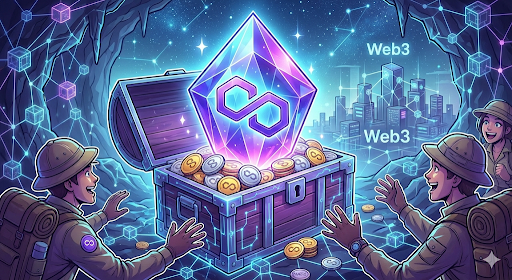
Polygon’s New Narrative Builds as 2026 Begins
Polygon is stepping back into the spotlight as 2026 begins, and the shift in attention is hard to ignore. After a quiet period in the previous cycle, the ecosystem is showing renewed signs of strength across technology, user growth, developer activity, and real-world adoption. These changes have sparked a growing conversation among analysts who believe Polygon may be gearing up for one of its biggest comebacks to date.
For new investors, understanding why Polygon is regaining momentum is important. The crypto market has matured, competition among Layer-2 solutions has intensified, and investors are more selective about which ecosystems can truly scale. Despite all of this, Polygon is re-emerging as a top contender — not because of hype alone but because of meaningful upgrades and strategic direction.
Heading into 2026, Polygon offers something that resonates strongly with new users: a blend of proven technology, strong brand partnerships, and a clear multi-chain vision designed to support long-term growth. This article breaks down the story behind Polygon’s comeback narrative and what new investors should know before the market heats up further.
Why Polygon Lost Attention — And Why It’s Returning
Polygon did not disappear — the market simply shifted around it. During earlier cycles, Polygon dominated the conversations around scaling Ethereum thanks to cheap transactions, fast speeds, and widespread adoption. But in time, new competitors arrived with fresh narratives and aggressive marketing, and investor attention scattered across newer ecosystems.
Several factors contributed to Polygon’s temporary quiet phase:
- Growing competition from emerging Layer-2 networks
• A cooling market sentiment following broader altcoin corrections
• Delays in ecosystem transitions and the rollout of new technologies
• Fragmentation as multiple Polygon chains evolved simultaneously
Even though Polygon maintained strong fundamentals, it lacked a unifying narrative. That changed with the introduction of Polygon 2.0, a system designed to bring all Polygon chains under one coordinated, scalable framework. This upgrade reignited developer interest and shifted the conversation around Polygon from “one of many Layer-2s” to “a foundational multi-chain platform for Ethereum.”
Now, the comeback narrative is gaining momentum because Polygon has something solid to stand on again: a clear roadmap, a scalable technology stack, and the backing of a global community that never left.
The Key Drivers Behind Polygon’s 2026 Momentum
Several forces are fueling the belief that Polygon may be preparing for a major breakout. These aren’t small improvements — they represent structural changes that could define the ecosystem’s long-term trajectory.
Polygon 2.0 Reshapes the Entire Ecosystem
Polygon 2.0 introduces a unified network made up of multiple Layer-2 chains powered by zero-knowledge technology. Instead of operating as separate chains, Polygon is transforming into an interconnected ecosystem that can scale endlessly as demand grows.
This matters for investors because:
- It dramatically improves scalability
• It strengthens the network’s long-term utility
• It enables developers to build more complex applications
• It positions Polygon as a major infrastructure layer for Web3
Polygon 2.0 isn’t just an upgrade — it’s a reinvention. This is the core foundation behind the ecosystem’s rising momentum in 2026.
zkEVM Technology Becomes a Major Advantage
Polygon invested heavily in zero-knowledge scaling long before it became an industry trend. That early vision is finally paying off. zkEVM technology offers fast, secure, low-cost transactions while remaining compatible with Ethereum. As more developers choose zk-based solutions, Polygon stands at the forefront with one of the most advanced implementations.
For new investors, this indicates that Polygon is not chasing the market — it is helping shape the future of scaling technology.
Enterprise and Real-World Adoption Begin to Re-Accelerate
Polygon has always been the preferred platform for global brands entering Web3. As adoption cycles restart in 2026, companies in the gaming, digital identity, finance, and retail sectors are once again exploring blockchain technology — and many are looking back to Polygon.
Business adoption is a strength that rarely gets priced into the market until momentum becomes undeniable. As usage expands, it reinforces MATIC’s utility across multiple chains and applications.
Developer Activity Shows Strong Signs of Recovery
Developer ecosystems are often the best indicator of long-term network growth. Over the past months, Polygon’s developer activity has increased with new launches, returning projects, and expansions in gaming and DeFi.
Growth in developer engagement often precedes user growth, liquidity expansion, and eventually price appreciation. This is one of the reasons analysts are watching Polygon closely in early 2026.
Market Sentiment Is Shifting in Favor of Proven Infrastructure
During uncertain market phases, investors often seek ecosystems with stable foundations. Polygon’s years of development, battle-tested scaling solutions, and strong reputation have put it back on the list of “reliable networks” as 2026 begins.
When sentiment shifts from speculation to fundamentals, Polygon tends to benefit — and that shift is becoming clearer this year.
What New Investors Should Know About Polygon in 2026
For newcomers entering the crypto market, Polygon offers a unique mix of accessibility and advanced infrastructure. Understanding its strengths and risks helps create a balanced view.
First, Polygon is designed for real usage. The ecosystem supports gaming, decentralized finance, identity systems, enterprise solutions, and creator-focused tools. This diversity gives the network resilience even when certain sectors slow down.
Second, MATIC remains essential across the Polygon network for staking, governance, and certain transaction costs. As the ecosystem expands under Polygon 2.0, this utility could grow over time.
Third, new investors should be aware that volatility remains part of the Polygon experience. Even with strong fundamentals, price performance can fluctuate based on market cycles, liquidity conditions, and investor sentiment. Polygon has historically performed exceptionally well in bull markets, but timing still matters in the crypto space.
Finally, Polygon is well-positioned for users who value low-cost transactions, fast performance, and Ethereum compatibility. This combination makes it beginner-friendly while still offering advanced tools for experienced developers and traders.
The Catalysts That Could Drive a Major Polygon Breakout in 2026
If Polygon does experience a major comeback this year, several key drivers will likely play a role:
- Continued rollout and adoption of Polygon 2.0 technologies
• Expansion of zkEVM usage across decentralized applications
• Growth in gaming, DeFi, and enterprise integrations
• Increased liquidity inflows from new users entering Layer-2 ecosystems
• A strong altcoin market environment that rewards scalable networks
• Rising developer migration toward zero-knowledge scaling solutions
• Broad improvements in Ethereum’s ecosystem that benefit Layer-2 networks
Any combination of these catalysts could fuel significant growth for Polygon throughout 2026, especially if market sentiment continues trending upward.
Is Polygon Truly Preparing for a Major 2026 Comeback?
Polygon enters 2026 with one of its strongest positions in years. The technological upgrades are meaningful, the ecosystem is expanding, developer activity is recovering, and sentiment is turning positive. Unlike purely speculative assets, Polygon offers real usage, established partnerships, and a clear path for long-term scaling.
For new investors, this makes Polygon an ecosystem worth watching closely. While risks remain — as they do with all crypto assets — the foundation supporting Polygon’s comeback narrative is more substantial than it has been in past cycles. If execution remains strong and broader market conditions align, Polygon could surprise many investors in the year ahead.
Disclaimer
This article is for informational purposes only and should not be taken as financial advice. Cryptocurrency markets are volatile, and investors should conduct their own research or consult a financial professional before making investment decisions.