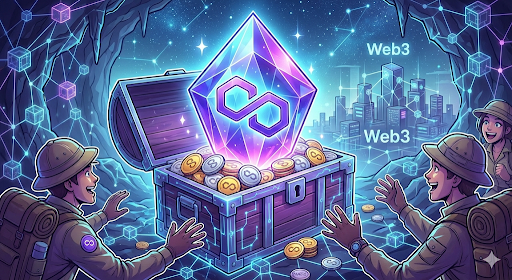
Polygon is once again drawing attention across the Web3 space with the announcement of a new ecosystem funding round, reinforcing its commitment to long-term growth and developer expansion. While price action often dominates short-term discussions, moves like this highlight a deeper strategy that focuses on building sustainable infrastructure and attracting innovation to the network.
Funding rounds within blockchain ecosystems are not just about capital. They are about direction. They signal where resources are being allocated, which sectors are being prioritised, and how a network plans to compete in an increasingly crowded market. For Polygon, this latest initiative appears to be aimed at accelerating development across key areas such as gaming, DeFi, real-world asset tokenisation, and zero-knowledge technology.
This kind of investment can have long-term implications that go far beyond immediate market reactions.
Why Ecosystem Funding Matters
In blockchain, growth is driven by developers. The more projects building on a network, the stronger the ecosystem becomes.
Funding rounds play a critical role in this process by:
- Supporting early-stage startups
• Encouraging innovation across different sectors
• Attracting new developers to the network
• Accelerating product development timelines
Without funding, many ideas never move beyond the concept stage. By providing resources, Polygon increases the likelihood that new applications will be built, tested, and launched within its ecosystem.
This creates a cycle of growth. More projects lead to more users, more activity, and ultimately a stronger network.
What This Funding Round Suggests About Polygon’s Strategy
The announcement of a new funding round suggests that Polygon is focusing on expansion rather than consolidation.
This is significant because it indicates confidence in the network’s long-term potential.
Key strategic priorities likely include:
- Expanding zk-based infrastructure
• Supporting cross-chain applications
• Strengthening gaming ecosystems
• Driving real-world use cases
Each of these areas represents a major growth opportunity.
For example, zk technology is widely seen as one of the most important developments in blockchain scalability. By investing in this space, Polygon positions itself at the forefront of next-generation infrastructure.
Similarly, gaming continues to be one of the most active sectors in Web3. Funding new gaming projects can help attract users who may not otherwise engage with blockchain technology.
Attracting Builders In A Competitive Market
The blockchain space is becoming increasingly competitive, especially among Layer 2 networks.
Developers now have multiple options, and choosing where to build often depends on:
- Available funding and support
• Developer tools and infrastructure
• Community size and engagement
• Long-term growth potential
By launching a new funding round, Polygon strengthens its ability to attract top talent.
Developers are more likely to choose a network that not only provides technical capabilities but also offers financial backing and ecosystem support.
This is particularly important for early-stage projects that require resources to develop and scale.
Potential Areas Of Innovation
Funding rounds often reveal where the next wave of innovation may come from.
Within the Polygon ecosystem, several areas stand out:
- Blockchain gaming and virtual worlds
• Decentralised finance and liquidity solutions
• Real-world asset tokenisation
• Identity and data verification systems
• Cross-chain infrastructure and interoperability
Each of these sectors has the potential to drive significant adoption.
For example, real-world asset tokenisation could bring traditional financial assets onto blockchain networks, increasing liquidity and accessibility. Gaming could introduce millions of new users to Web3 through engaging experiences. DeFi continues to evolve, offering new ways to manage and deploy capital.
By supporting projects across these areas, Polygon diversifies its ecosystem and reduces reliance on any single use case.
Long-Term Impact On Network Activity
One of the most important outcomes of ecosystem funding is increased network activity.
As new projects launch, they generate:
- Transaction volume
• User engagement
• Liquidity flows
• Developer interaction
This activity contributes to the overall health of the network.
Unlike short-term speculative trading, application-driven activity tends to be more consistent and sustainable. Users interact with applications regularly, creating ongoing demand for network resources.
Over time, this can strengthen the network’s position within the broader blockchain landscape.
How This Could Influence POL Token Dynamics
While ecosystem funding does not directly impact price in the short term, it can influence token dynamics over time.
Increased activity can lead to:
- Higher demand for network usage
• Greater visibility for the ecosystem
• More integration across applications
• Expansion of the user base
However, the key factor remains value capture.
For POL to benefit directly, network activity must translate into demand for the token itself. This depends on how transactions, fees, and incentives are structured within the ecosystem.
If this link is strong, funding-driven growth can support long-term price appreciation.
Challenges That Come With Expansion
While funding rounds create opportunities, they also introduce challenges.
Key risks include:
- Misallocation of capital
• Projects failing to deliver on expectations
• Increased competition within the ecosystem
• Difficulty maintaining quality across multiple initiatives
Not every funded project will succeed. In fact, many will not.
The success of the funding round depends on how effectively resources are allocated and how well supported projects are able to execute their ideas.
Polygon’s role is not just to provide funding, but to create an environment where projects can thrive.
The Importance Of Execution
Funding is only the first step.
What matters most is execution.
For this initiative to succeed, funded projects must:
- Deliver functional and engaging products
• Attract and retain users
• Integrate effectively within the ecosystem
• Provide real value beyond speculation
This is where many ecosystems struggle.
Strong funding can attract attention, but long-term success depends on building products that people actually use.
Polygon’s challenge will be ensuring that the projects it supports meet these criteria.
What This Means For Polygon’s Position In Web3
The announcement of a new ecosystem funding round reinforces Polygon’s commitment to growth and innovation.
It signals that the network is:
- Actively investing in its future
• Focused on expanding its ecosystem
• Positioned to compete in a rapidly evolving market
This proactive approach can strengthen Polygon’s position within Web3.
As more projects are built and launched, the network becomes more attractive to both developers and users.
This creates a positive feedback loop that can drive long-term expansion.
Final Thoughts
Polygon’s latest ecosystem funding round is more than just a financial announcement. It is a strategic move aimed at accelerating development and strengthening the network’s position in the blockchain space.
By supporting new projects and encouraging innovation, Polygon is investing in the foundations of its future growth.
While the immediate impact may not be visible in price action, the long-term implications could be significant.
If the funding is deployed effectively and supported projects succeed, this initiative could contribute to increased activity, stronger adoption, and a more resilient ecosystem.
For now, it highlights an important reality. In blockchain, the networks that invest in builders are often the ones that lead the next phase of growth.
Disclaimer
This article is for informational purposes only and does not constitute financial, investment, or legal advice. Cryptocurrency and blockchain projects involve risk, and readers should conduct their own research before making any decisions.